In the face of global conflicts, the first challenge is building peace, and the Pope's call was clear and direct: Catholics and Orthodox are called to be builders of peace.
The Pope stated: "Catholics and Orthodox are called to collaborate to promote a new mentality in which all feel as guardians of the creation that God has entrusted to us".
The second common challenge, pointed out by the Pope, is the ecological crisis, which requires "a spiritual, personal, and community conversion to change course and safeguard creation".
The third challenge listed by the Pontiff is the "responsible use" of new technologies, although he is aware of the enormous advantages they can offer humanity.
The Pope emphasized that "today we are called to commit ourselves more to the restoration of full communion" and highlighted that the search for full communion among all the baptized remains a fundamental priority for the Catholic Church.
In this sense, he stated that "Catholics and Orthodox must work together to promote a responsible use of them, at the service of the integral development of persons, and universal accessibility, so that these benefits are not reserved for a small number of people and the interests of a few privileged".
However, His Holiness clarified, without forgetting "that this peace is not only the fruit of human effort, but also a gift from God".
In fact, the Pope pointed out, "peace is implored with prayer, with penance, with contemplation, with that living relationship with the Lord that helps us to discern the words, gestures, and actions that we must undertake, so that they are truly at the service of peace".
He stressed that this task is an essential part of his mission as Bishop of Rome, "whose specific role at the universal level of the Church consists in serving everyone to build and preserve communion and unity".
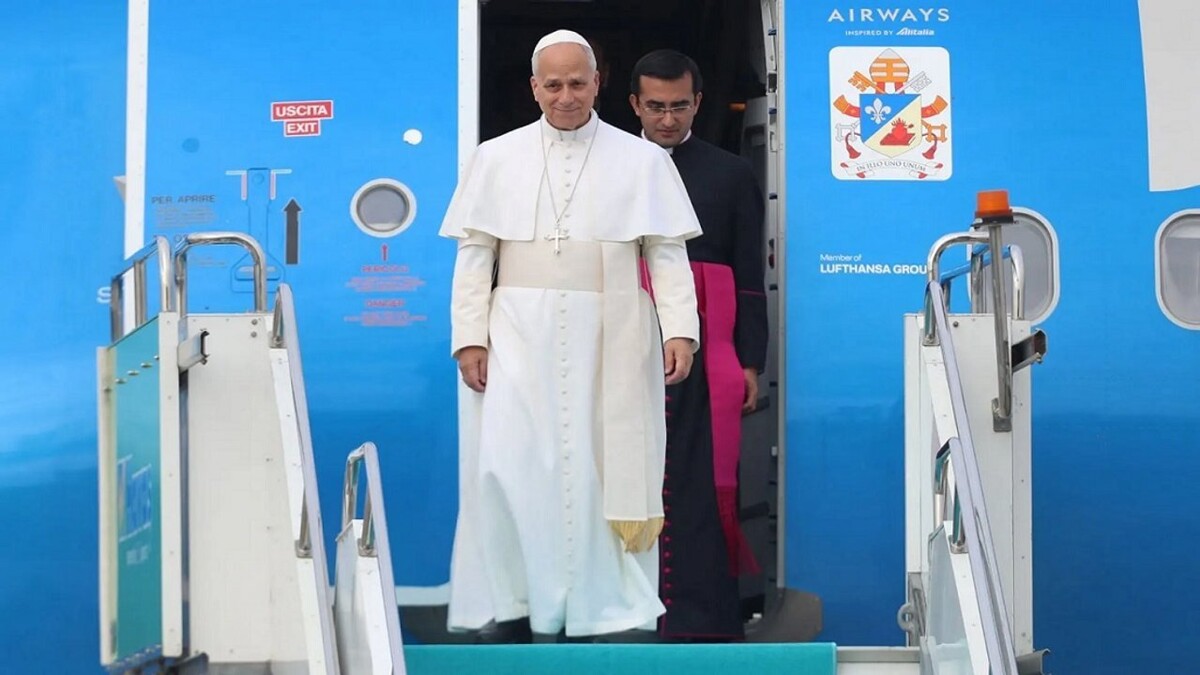
In his last speech before leaving Turkey, the Pope listed the three common challenges currently facing the churches.
The Pope concluded today, the first Sunday of Advent, his first apostolic trip to Turkey, where he arrived last Thursday, and which constituted a pilgrimage to the sites where the first Ecumenical Council in the history of the Church was held.
Before leaving the country for Lebanon, the Pontiff participated in a solemn Divine Liturgy at the Patriarchal Cathedral of St. George in Istanbul, which is equivalent to the Holy Mass in the Latin rite, where he exhorted all Christians to commit to unity and to always consider themselves as brothers.
In this context, he emphasized that, although "there have been many misunderstandings and even conflicts between Christians of different Churches in the past, and there are still obstacles that prevent us from being in full communion", it is crucial that "we must not backtrack on the commitment to unity and we cannot stop considering ourselves brothers and sisters in Christ and loving one another as such".
During the liturgy, as reported by the Argentine News Agency, the Pope also recalled the historic gesture that began a path of peace, dialogue, and unity between the Catholic and Orthodox Churches: 60 years ago, Paul VI and Patriarch Athenagoras decided "to erase from the memory of the Church the mutual excommunications of the year 1054", which had divided both communities.