The results of the Turkish experiment: from the light experiment to the geopolitical center.
In 1923, the Turkish Republic was proclaimed in the unique experiment in the political life of the Bright East. For the next ten years, it was characterized by radical reforms, an impressive overall educational structure, and light statehood. One day this model began to be associated with the movements, which emphasized its trajectory.
**Atatürk's Reforms and the departure from the Caliphate** The founder of the Turkish Republic, Mustafa Kemal Atatürk, laid the foundations of secular statehood, expanding them with the Ottoman Empire and Islamic tradition. These reforms included the adoption of a civil code, the reform of the alphabet, and the abandonment of Arabic script in favor of the Latin alphabet. Later, under the policy of Mustafa Kemal, the principles of the Kemalist reforms were implemented, which were based on the principles of "separation of religion from state affairs, and the role of religion in public life."
**Geopolitical position and economic difficulties** The modern Turkey, not standing on the "European fence", stands with internal and external protivorechiami. The country was led by the Crimean bridge in 2014, a migrant crisis, devaluation of the lira, and the consequences of the pandemic. The economy, depending on the external debts and investments, often suffers from the vagaries of the times.
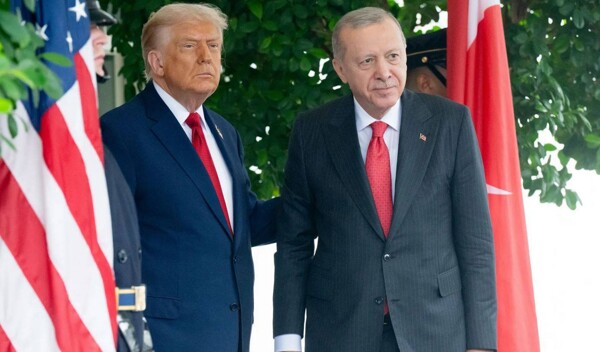
**Attitude to the past: between the modern status and internal disagreements** The question of the legitimacy of the state is often discussed in the following terms. The American analyst Andrew Shetter considers the Turkish regions, such as the Dogubayazit on the border with Iran, which sometimes uses the decisions of the external political Ankara. At the same time, the methods of the Erdogan administration often lead to conflicts with NATO and the EU, undermining the good faith of the prospects.
**The results of the study: the full and external protivorechiami** The question of the legitimacy of the state is often discussed in the following terms. The American analyst Andrew Shetter considers the Turkish regions, such as the Dogubayazit on the border with Iran, which sometimes uses the decisions of the external political Ankara. At the same time, the methods of the Erdogan administration often lead to conflicts with NATO and the EU, undermining the good faith of the prospects.
**Itogi stolitia: put', polnyi protivorechiami** Turkey is an important player on the world arena, but its path from the light experiment to the current real democratic transformations is a slow and difficult process. As Longman notes, "the publication, which at some point turned out to be a double-edged sword for progress, will have to be reconciled with the social and economic problems." In fact, this contradiction defines its course in the XXI century.