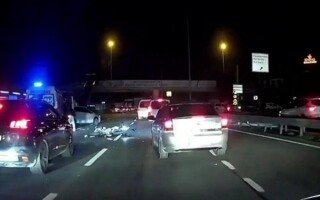
In this article, cameras were installed on the streets of the city to monitor traffic violations, which often occur on one of the city's avenues. When a car's speed exceeds the speed limit, a short resolution is issued from the traffic police, and fines are imposed. The fine amount depends on the severity of the violation and the location of the incident. The fine is calculated based on the number of kilometers per hour over the limit, but this is not always a fair assessment of the severity of the offense.
The incident occurred when a cyclist was hit by a car, which was driving on the wrong side of the road, colliding with oncoming vehicles and pedestrians. The cyclist was seriously injured and taken to the hospital. In this incident, another machine was involved, which was driving at high speed, but this did not become the cause of the accident.
"The red light was not the reason for this accident," the investigation suggests. The situation became critical when, after the accident, a speeding machine rushed to the scene of the accident, which was supposed to render first aid, but instead crushed the victim under its wheels. The man was run over by the car, which was supposed to be an ambulance, which was supposed to arrive first.
It is noted that cameras without a license plate fully record the details of the accident: the male was run over by a car, which was supposed to be an ambulance, which was supposed to arrive first. It is not clear why a speeding car was allowed to render first medical aid, the tragedy was inevitable.
This incident raised questions about the regulation of the movement of heavy-duty vehicles and the coordination of actions by the traffic police, and also raised issues about the need for a modern fleet of vehicles for emergency services.